‘Neighborhood Nursing’: This program aims to be a national model for reinventing primary care
Pilot project pairs nurses and community health workers to reach residents where they live
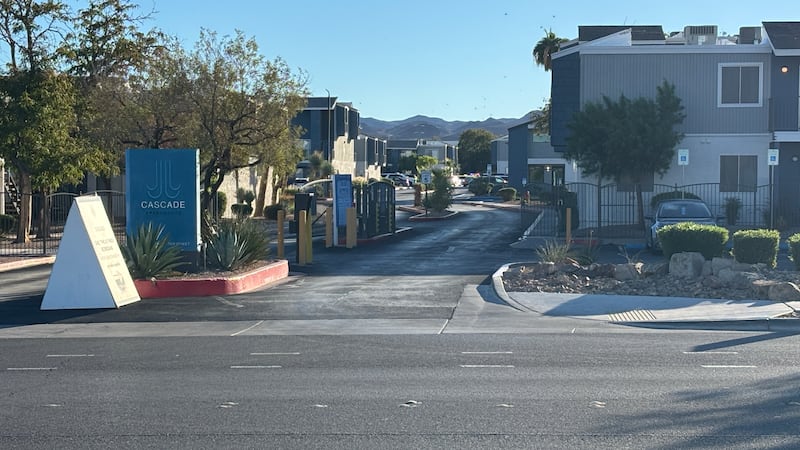
BALTIMORE, Md. (InvestigateTV) — A pilot program called Neighborhood Nursing is providing basic primary care outside the traditional clinic setting in East Baltimore, setting up in a church and visiting apartment complexes and homes to reach residents.
The program’s services are open to anyone who lives in the area. Those services are free and funded for now largely through philanthropic donations.
How the program works
Stacye Cooper, a registered nurse with the program, said the goal is to be available in spaces where residents feel comfortable.
Cooper focuses on each patient’s physical condition, including blood pressure checks and diabetes management.
Terry Lindsay, a community health worker with the program, works to identify and address patients’ social needs, including help with rent, utilities and food.
“You might think, well, is that health? But that is health! And the trust comes from showing up over and over and from being in trusted spaces,” said Sarah Szanton.
Szanton is dean of the Johns Hopkins School of Nursing and leads the Neighborhood Nursing effort in partnership with three other universities in Maryland.
She would like to see the program expand beyond Maryland.
“The end goal is really to be in every state and for this to be how we do health care,” Szanton said. “Why are we here? We’re here to change the health of the nation.”
National primary care shortfalls
Nearly a third of Americans do not have a primary care provider, according to the National Association of Community Health Centers. That works out to more than 100 million people who are missing out on routine visits and screenings.
A 2026 “Health of U.S. Primary Care” report found that regular access to primary care is associated with lower hospitalizations and health costs, yet fewer than 5% of U.S. health care dollars are spent on primary care.
“We’ve really got it backwards,” Szanton said.
A model from Costa Rica
Szanton said Neighborhood Nursing was inspired by a public health care program in Costa Rica.
“It started in the mid-90s, and it’s based on having zones where everyone in a zone has the same nurse,” Szanton said. “Everyone in Costa Rica gets one visit a year and if you have higher risk for some reason you get two or three.”
Dr. Madeline Pesec, a physician and researcher at Harvard University’s School of Public Health, has studied the Costa Rican model with colleagues for years.
“It’s really impressive,” Pesec said. “To me, that is the secret sauce of Costa Rica, that they know exactly who their patients are.”
Pesec said Costa Rica has made progress in tackling infectious and chronic disease, which she said led to fewer deaths.
“We saw a 13% all-age, all-cause reduction in mortality. And we saw a 19% reduction in cardiovascular mortality, meaning diseases that come from heart attack or stroke,” Pesec said. “And the way you get those numbers down is by 10 years earlier, really working to control their blood sugar, working to control their blood pressure.”
Patients describe their experience
Edward Murray, 73, is one of the patients Neighborhood Nursing sees on a weekly basis.
“They make you feel comfortable. They talk to you. They don’t talk at you,” Murray said.
Cooper said she follows up when patients miss appointments.
“I’m looking around like, where is Mr. Murray? I’ll end up calling him. If he doesn’t answer his phone, I knock on his door. I know his apartment number,” Cooper said.
“It’s the love that they show,” Murray said.
Another couple, Maria and Brian, came in for a checkup a few weeks ago. In talking with Lindsay, it was revealed they had only recently secured housing after years living on the streets and had no furniture.
“We were basically sleeping on a rug in the living room in the apartment. So on the floor. And Terry ended up finding this Baltimore furniture bank, made an appointment for us. We got all three rooms of furniture for $350,” they said.
Asked what it means to help patients with needs beyond medical care, Lindsay said: “They look at us for all different types of advice. Sometimes it’s just being there for a person.”
Szanton said the program has served thousands of patients in the roughly three years since the pilot began.
“Oh it’s the reason to do it, right? It’s the feeling that we’re changing lives,” Szanton said.
Funding and expansion
Ann Greiner, who heads the Primary Care Collaborative, which advocates for primary care policy reform, said funding is one of the biggest challenges facing the system.
Greiner said expanding the program nationwide would require buy-in from federal and state lawmakers, health care providers and insurance companies.
“It’s not that there’s not enough money in our system. There is so much money in our system,” Greiner said. “It’s just, in my view, being spent on the wrong things. So we really need to have a reset.”
Szanton said the program is already in funding talks with policymakers.
“We see it kind of as a partnership between government and insurers,” Szanton said. “We’re not just offering it in Baltimore. We’re also at the same time working with policymakers.”
Cooper and Lindsay said they believe the program is reaching people who otherwise would not receive care.
“There’s so many people, if we weren’t here, they wouldn’t go to the doctor, they would not have these services. It’s our mission,” Lindsay said.
The Association of American Medical Colleges said primary care provider shortages are expected to worsen. By 2033, the AAMC projects a shortfall of more than 21,000 primary care physicians in the United States.
Copyright 2026 Gray Media Group, Inc. All Rights Reserved.