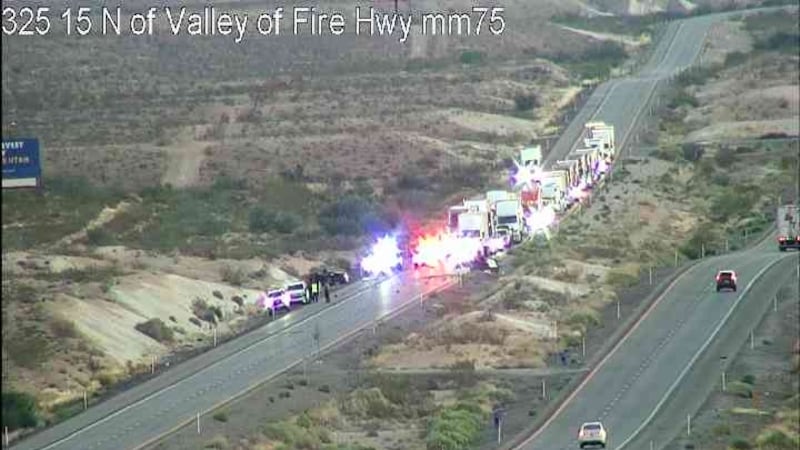
2 hikers who died in Grand Canyon floods ID’d. 1 remains missing
Rescuers saved over 80 people, officials say
GRAND CANYON, AZ (AZFamily/AP) — Two men are dead, and one is still missing after flash flooding tore through the Grand Canyon over the weekend, according to National Park Service officials.
Family members and officials identified the two men whose bodies were recovered as Dr. John Giusti, 46, and Brent Rosenkranz, 42, both of Granbury, Texas.
Timothy Allen Smith, 53, who was with Giusti and Rosenkranz, remains missing as of Tuesday afternoon. Smith’s family was told by the National Park Service that he is the only person authorities are still searching for following the devastating floods.
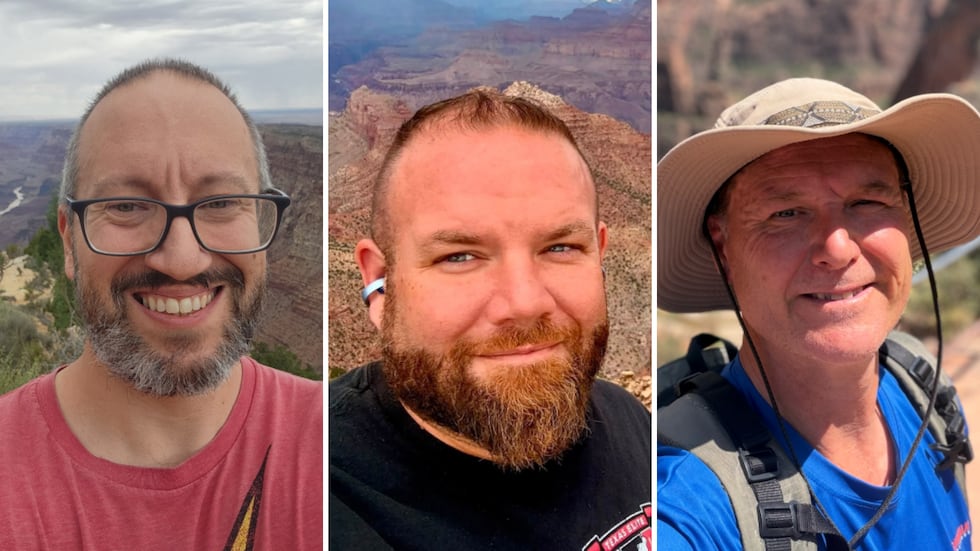
“Our families are profoundly grateful to the search-and-rescue personnel who have worked tirelessly throughout this tragedy and to everyone who has prayed for us, reached out, offered help and surrounded our families with love,” a spokesperson for the families said Tuesday.
“We ask that you continue praying for Tim, for everyone searching for him, for the Giusti and Rosenkranz families as they grieve John and Brent, and for all of the families affected by this tragedy.”
Saturday’s flash flood also severely damaged infrastructure in the canyon and the legacy water pipeline serving Grand Canyon National Park. Officials barred tourists from staying at lodges and hotels inside the park and issued emergency water restrictions for year-round residents.
Search and recovery efforts continue
Search efforts continue Tuesday to find Smith, including four teams with dogs for body recoveries, along with boats, helicopters and ground crews.
A Border Patrol scent-detection dog team joined the search, and a specialized drone team is also being transported to Phantom Ranch to assist.
Park officials said they are partnering with Coconino County Search and Rescue Team and Border Patrol Search, Trauma, and Rescue Unit (BORSTAR) to scour debris-flow areas and sections north of Phantom Ranch. River patrols are also searching downstream of Phantom Ranch.
However, another chance of monsoon storms Tuesday could threaten search efforts and delay infrastructure damage assessments.

“As of right now, they have no reason to believe, from the tips we’ve been through so far, that there’s anybody besides the one missing person,” Incident Commander Dave Black said during Monday’s news conference.
Black said 82 people were stuck in the canyon when the rain started falling and the flash flooding hit the Phantom Ranch area, Bright Angel Creek, and the Cottonwood Campground.
Searchers used night vision and other equipment to find people who needed rescuing, according to Black. Rangers referred to the park’s permit system and checked vehicle license plates to track the number of missing people.
Forty-five people were evacuated by sunset Saturday, and 37 more by Sunday afternoon. All of the park employees were saved.
Giusti was recovered near Crystal Rapids Sunday, while Rosenkranz was recovered by the Colorado River Monday afternoon, according to officials.
Hiking trip turns into tragic recovery
Family said that the three men went to the Grand Canyon together Friday for a trip they were eagerly awaiting. They planned to hike to Bright Angel Campground, spend two nights exploring the trails and fish near the bottom of the canyon, hike to Havasupai Gardens and complete their journey.
A spokesperson for the family said the three men were last heard from on Thursday evening, when they shared excitement about beginning their trip. The men reached Bright Angel Campground on Friday and went exploring Saturday before floodwaters hit.
Texas chiropractor killed in flood remembered as ‘gifted healer’
Giusti was a chiropractor from Granbury, Texas, who poured himself into helping others, his family said in a statement Monday afternoon.
He was a husband and devoted father of three daughters, his family said.
“To the community, he was a gifted healer. To his friends, a powerhouse of life. To his daughters, he was their ultimate hero. To me, he was my whole world,” said his wife Janet Giusti.
They also shared that Giusti was an avid runner, a comic books fan, and loved fast cars. His longtime dream was to explore the Grand Canyon.
Texas martial artist described as ‘deeply devoted’ family man
Family members say Rosenkranz was a husband, father of three sons and a lifelong martial artist. He spent much of his life teaching and mentoring his students as an ATA martial arts instructor and school owner.
“It is with a broken heart that I share the passing of my husband, Brent Rosenkranz, while on his final adventure, a hike at the Grand Canyon,” Rosenkranz’s wife, Elisha, said in a statement Tuesday.
Family fondly described how Rosenkranz was known for taking young people under his wing, especially when they needed someone. His wife says he was known for turning ordinary days into occasions, often through his meals.
“You created a meal for every event, every milestone, and sometimes just because it was Tuesday, always with the same mad-chef style and incredible attention to detail,” she said. “Thank you for every adventure, every meal, every laugh, and every hug. Most of all, thank you for giving me the love of a lifetime. You will always be in our hearts.”
Finding the missing hiker
Anyone with information is asked to contact the NPS Investigative Services Branch tip line at 888-653-0009 or email nps_isb@nps.gov. Tipsters can remain anonymous; providing your own name is optional.
Smith, like Rosenkranz and Giusti, was born and raised in Granbury. The husband and father of three now lives in Star Valley, Wyoming, and is a NetJets pilot.
Timeline of the flooding
The flooding began around 2:30 p.m. Saturday, according to the Park Service.
A Grand Canyon National Park spokesman said Monday that a gate system alerted crews about the flooding. The flooding worsened in the creek, picked up force and knocked out the alert system.
Visitors talked of a massive deluge and rangers warning of rockslides, and saw huge pools of logs and debris rolling down the river as they stood nearby awaiting rescue.
By Sunday morning, rescuers had airlifted 62 people out of Phantom Ranch and the lower North Kaibab Trail.
Additional evacuations happened Sunday at Cottonwood Campground and Phantom Ranch, coordinated by the Park Service and the Arizona Department of Public Safety.
The Colorado River was closed on Saturday because of the flooding, which is fairly unprecedented. The river reopened Sunday at noon.
Xanterra Travel Collection, which provides lodging at the national park, said that all its guests and employees were evacuated from Phantom Ranch and that the hotel will remain closed until it’s deemed safe for staff and guests to return. The company said it’s currently assessing the extent of the damage.
Evacuees were taken to the Maswik Lodge Cafeteria on the South Rim, where the American Red Cross provided assistance.
Late Monday morning, more rain fell as the state Department of Emergency and Military Affairs was coordinating with the park service and county emergency management officials in search and recovery efforts.
Widespread damage to trails and bridges
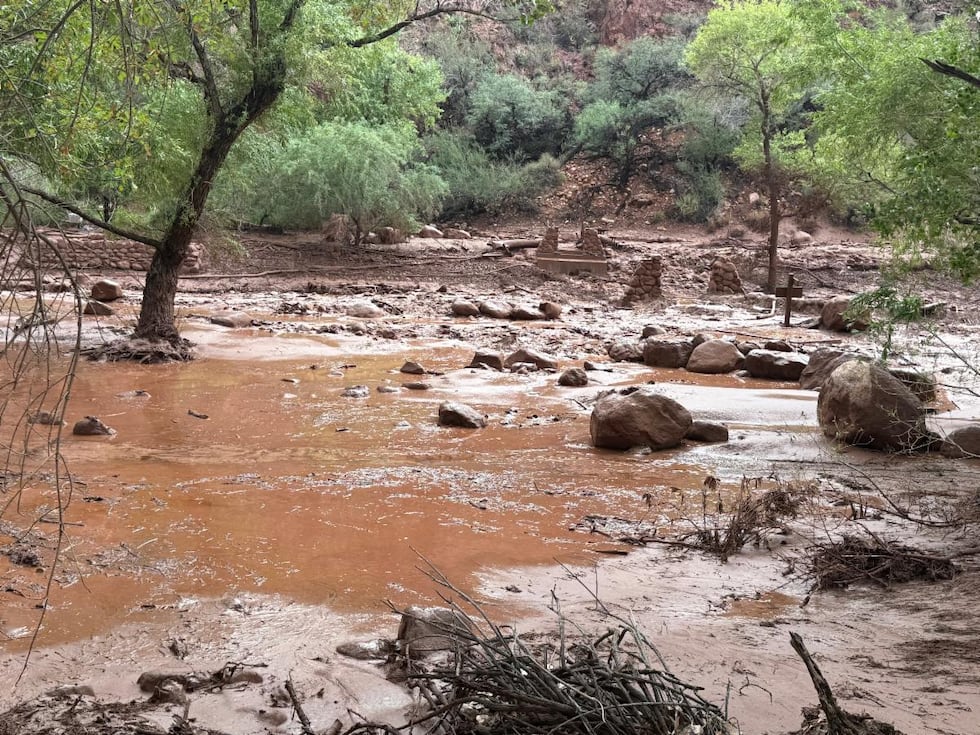
The flooding caused “extensive damage to infrastructure” throughout Bright Angel Canyon, officials said. Nearly all footbridges spanning Bright Angel Creek were reportedly destroyed, cutting off hiker access across the creek.
Park workers continue to assess damage to trails, bridges, utilities and other facilities.
The Colorado River is also closed to river traffic until further notice after metal structures and debris washed into the water. River parties already in the canyon are receiving guidance from river operations rangers through the Grand Canyon River Alert system.
Rain also fell on part of the Dragon Bravo fire scar, a burn area left by a lightning-caused wildfire in July 2025. Without vegetation, a barren burn scar allows runoff to flow more quickly. The steep, rocky nature of the canyon itself funnels water rapidly.
Closures in effect
The following areas are closed until further notice:
- Phantom Ranch, Bright Angel Campground, the Phantom Ranch Canteen and cabins
- The entire North Kaibab Trail from the North Kaibab Trailhead to Phantom Ranch
- The Black Bridge and Silver Bridge crossing the Colorado River
Officials have not given a reopening timeline and say additional inner-canyon closures may be necessary. Updates are being posted on the Grand Canyon’s website.
Overnight lodging halted, water restrictions in place
The flood was a major blow to an enduring effort to modernize the water pipeline that serves visitors and the roughly 1,600 residents of Grand Canyon Village.
The canyon’s aging pipeline, the Transcanyon Waterline, was damaged by roughly 40%, leading the park to implement Stage 4 water restrictions for the South Rim.
“The waterline is currently not operational, leaving the park with limited water reserves and requiring significant water conservation measures to ensure available supplies can be maintained,” park officials said in a statement.
Only dry camping will be allowed as spigot access will be turned off. The park will remain open for day use, officials said.
“These measures are crucial for ensuring the safety and sustainability of water resources,” park officials said. “We are asking residents and visitors to help conserve water by limiting showers to five minutes or less, turning off faucets while shaving or brushing teeth, flushing toilets selectively, washing laundry with full loads, and reporting leaks to the appropriate offices.”
The park also closed all overnight hotel accommodations effective Monday. This includes hotel facilities operated by Xanterra, such as Phantom Ranch, El Tovar, Bright Angel Lodge and Maswik Lodge, as well as Delaware North’s Yavapai Lodge and Trailer Village.
All of its South Rim lodges cannot accommodate overnight guests through Sept. 6, but lodging will be available at its Tusayan sister hotels, The Grand Hotel and Grand Canyon Hotel and Suites, according to Xanterra’s Grand Canyon South Rim general manager Andy Stiles.
‘I was scared for my life,’ hikers recall moments before rescue
One rescued hiker said the water was moving so fast that if he hadn’t been evacuated, it would’ve been “game over.”
“I definitely think we could have gotten caught up in that side creek, and if we would have fallen in or the water carried us in, I think it would have been game over,” David Gregory said. “Because that creek was moving so quickly, there was so many rocks and tree branches, and then once you get into the Colorado River, it was like a whirlpool in there with all the debris circling around.”
Gregory said he and a group of about 20 hikers were pushed back from the water several times before being rescued.
A California couple rescued from the Phantom Ranch area described the rushing waters as ‘biblical.’
They ran for their lives in knee-deep water to reach higher ground as a wall of floodwater rushed toward them.
“He’s yelling at me, ‘Run, run, run, run.’ I can’t run any faster. I’m going to just die. I mean, I was scared for my life for sure,” Erica Viola recalled. “And he was trying to help me because the day before, I had fallen and hurt my knee. So it was treacherous.”
“I knew if I didn’t run, we weren’t going to make it,” she added.
Why ‘monsoon season’ in the Grand Canyon is risky
Visiting the Grand Canyon can be particularly dangerous in the summer because of the risk of flash flooding that accompanies the monsoon, or rainy season. Clear days can quickly give way to thunderstorms and downpours.
Rain also fell on part of the Dragon Bravo fire scar, a burn area left by a lightning-caused wildfire in July 2025. It burned for days before exploding into a fast-moving conflagration that forced evacuations and consumed the historic Grand Canyon Lodge, some cabins and other structures.
Without vegetation, a barren burn scar allows runoff to flow more quickly.
The steep, rocky nature of the canyon itself funnels water rapidly. What might be a normal summer downpour somewhere else can become a charging wall of water in the canyon.
El Niño intensified this year’s desert monsoons
This year’s heavy monsoon rains are especially intense because there is a higher amount of water vapor in the atmosphere, mostly because of a strong El Niño, said A. Park Williams, a hydroclimatologist at the University of California, Los Angeles.
The natural warming of parts of the Pacific Ocean can warp weather globally. That extra water vapor in the southwest U.S. gets wrung out in the storm in the form of rainfall, he said.
The link to human-caused climate change and the heavy Arizona rain is pretty strong, said climate scientist Daniel Swain of the California Institute for Water Resources.
A few months ago, Swain and colleagues published a study in the journal Weather and Climate Extremes finding that during the summer, short-term intense downpours in the West — akin to the one that hit the Grand Canyon — have become 10% stronger since 2000.
See a spelling or grammatical error in our story? Please click here to report it.
Do you have a photo or video of a breaking news story? Send it to us here with a brief description.
Copyright 2026 KTVK/KPHO. All rights reserved.